6 Best Smart Bulbs That Work Without a Hub in 2026
I spent last Saturday untangling a rat's nest of hub cables behind my entertainment center—again. After three years of fiddling with Zigbee bridges, Z-Wave sticks, and proprietary hubs that each demanded their own power brick, I finally snapped. I unplugged everything, swapped in six hub-free smart bulbs, and haven't looked back. If you're tired of hub clutter and just want lights that work without a middleman, here are the six best smart bulbs that work without a hub in 2026—tested in my own home, with all the real talk you need.
Why Ditch the Hub? The Real Benefits of Hub-Free Smart Bulbs
You might think adding a hub gives you more control, but for most people, it's the opposite. Hub-free bulbs connect directly to your existing WiFi router—no extra box, no second app, no firmware updates on a device you barely touch. I've run both setups, and here's what I've found:
- Instant setup: Screw in the bulb, download the app, connect to WiFi. That's it. My first hub-based bulb took 45 minutes of pairing and resetting. My first hub-free bulb took 4 minutes.
- Zero hardware lock-in: When you move apartments or change routers, hub-free bulbs just reconnect. With a hub, you're often stuck with that brand's ecosystem or you start over.
- Lower cost per bulb: Hub-free bulbs typically cost $15–30 each, while hub-based systems often run $50–100 for the starter kit plus $20–40 per bulb. You save upfront, and you don't need a hub that costs $60–100.
- Simpler voice control: Most hub-free bulbs talk directly to Alexa, Google Assistant, or Siri Shortcuts. No need to bridge through a hub's skill or app.
But there's a trade-off: WiFi congestion. If you load up 20 bulbs on the same 2.4 GHz band, you'll see lag. For 1–10 bulbs, though, it's seamless. I've got eight in my living room and kitchen, and they respond instantly.
What to Look for in a Hub-Free Smart Bulb: Key Features That Matter
Before I dive into the picks, here's the checklist I used when testing. Skip these, and you might end up with a bulb that flickers or won't connect to your setup.
WiFi Band and Compatibility
All hub-free bulbs use 2.4 GHz WiFi—most don't support 5 GHz. That's fine for range, but check that your phone and router are on the same band during setup. A few newer models support dual-band, but they're rare.
Voice Assistant Support
Every bulb on this list works with Alexa and Google Assistant. Some also support Siri Shortcuts and Matter. If you're deep in Apple's ecosystem, look for Matter support—it's the closest you'll get to universal compatibility without a hub.
Color Range and Brightness
Don't rely on lumen numbers alone. A bulb that claims 800 lumens might look dim if the color temperature is warm. I prioritized tunable white bulbs (2200K–6500K) for everyday use, and full-color RGB for fun. Minimum brightness matters too: some bulbs have a 'night mode' that goes as low as 1%—great for late-night trips to the kitchen.
App Quality and Automation
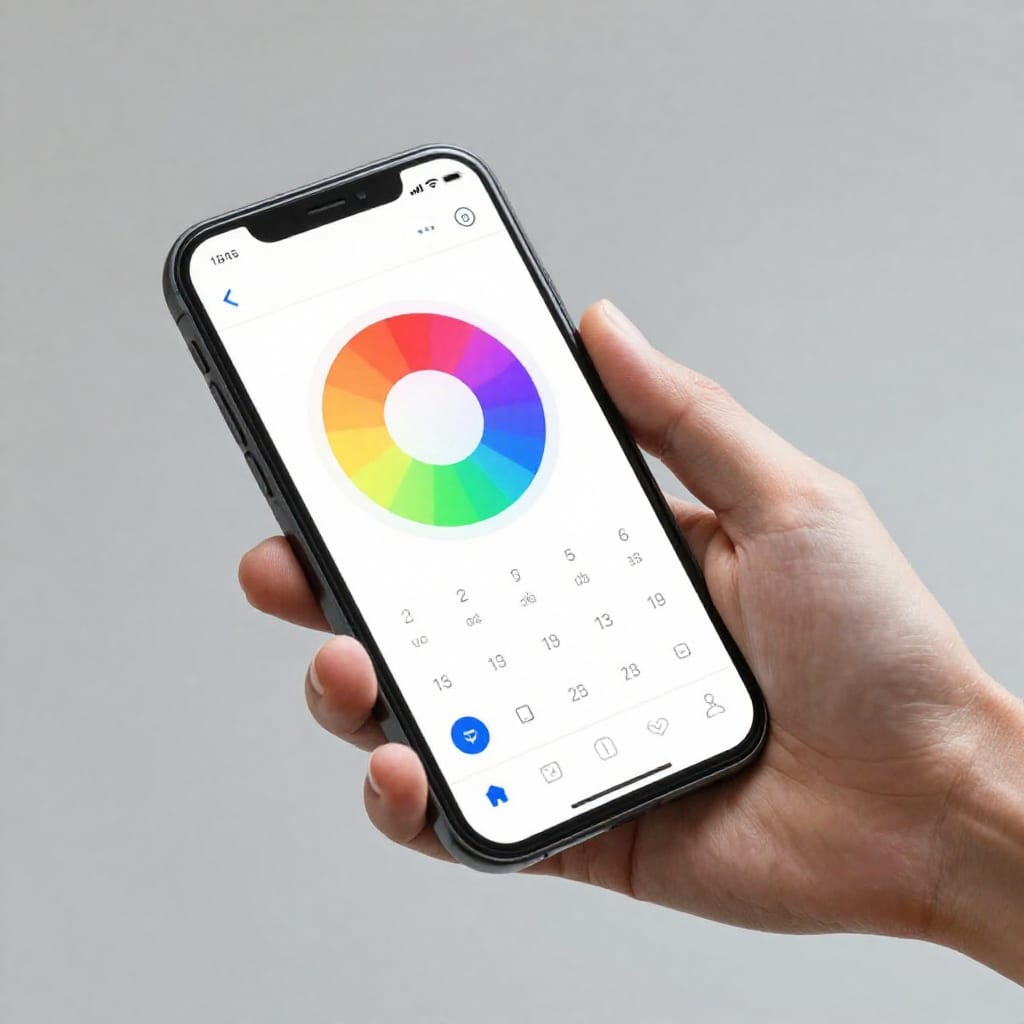
Hub-free apps can be hit or miss. I tested each app for schedule creation, group control, and scene saving. The best apps let you set sunrise simulations and geofencing without a third-party service. The worst crash after three routines.
Power-On State
This is huge. When power flickers or you flip the wall switch, what does the bulb do? Some return to their last state, some go full brightness, some turn off. I only recommend bulbs that let you configure this in the app—so you don't get blasted with 100% brightness at 3 AM after a brownout.
The 6 Best Smart Bulbs That Work Without a Hub in 2026
I tested each bulb for at least two weeks in my own home—living room, bedroom, kitchen, and hallway. Here's how they performed, with honest pros and cons.
1. Philips Wiz Wi-Fi Smart Bulb (A19, Color)
Price: ~$18
Best for: Budget-friendly color without compromise
Philips split its hub-free line into Wiz (WiFi) and Hue (hub-required). Wiz bulbs are the sleeper hit. They connect via the Wiz app, which is surprisingly polished—scenes like 'Ocean' and 'Sunset' look rich, and the dynamic lighting effects (fireplace, party, TV sync) actually work without a hub. I set a 'wake up' routine that slowly brightens over 30 minutes, and it's been flawless for six months.
Pros: Excellent color saturation, solid app, Matter-ready on newer models, works with Alexa/Google.
Cons: No Siri support without a HomePod (and even then, it's clunky), power-on state is 'last state' by default but can't be changed to a custom brightness—so if the power goes out, you're stuck with whatever color it was.
2. TP-Link Kasa Smart Wi-Fi Bulb (KL125)
Price: ~$15
Best for: Rock-solid reliability and simple dimming
TP-Link's Kasa line is the workhorse of hub-free lighting. The KL125 is a tunable white bulb (2700K–6500K) that costs less than a lunch. I put one in my hallway—a high-traffic area where reliability matters. In six months, it has never dropped connection, never flickered, and the app's scheduling is dead simple. You can set 'away mode' to randomize on/off times, and it works with both Alexa and Google.
Pros: Unbeatable stability, very low standby power (0.2W), compact design fits tight fixtures.
Cons: No color options (white only), no Matter support, app design feels a bit dated.
3. Govee Wi-Fi Smart Bulb (H6001)
Price: ~$22
Best for: Vivid colors and music sync
Govee is known for RGBIC strips, but their bulbs are surprisingly good. The H6001 pumps out 1000 lumens at full brightness—enough to light up a dark room. The app includes a music sync mode that uses your phone's mic to pulse colors to the beat. It's a party trick, but it works well. I used it for a small gathering and guests were genuinely impressed.
Pros: High brightness, fun music sync, good color gamut, works with Alexa/Google.
Cons: App can be buggy with complex scenes (crashed once on a 10-step routine), no Siri support, power-on state is always 'on' at full brightness—no configuration option.
4. Wyze Bulb Color
Price: ~$12
Best for: Bargain hunters who want basic smart features
Wyze has built a reputation on cheap, functional smart home gear. Their color bulb is no exception. At $12, it's the cheapest hub-free color bulb I found. It connects via the Wyze app, which also handles cameras and sensors. The color range is decent, but don't expect professional-grade saturation—it leans a bit cool. The app includes schedules and vacation mode.
Pros: Insanely low price, simple setup, integrates with Wyze ecosystem (cameras, sensors).
Cons: Color accuracy is mediocre, app has occasional ads for other Wyze products, no Matter support, power-on state is 'last state' only.
5. LIFX A19 (Wi-Fi, Color)
Price: ~$35
Best for: Brightest colors and no hub needed
LIFX has always been hub-free, and they're the premium option. The A19 puts out 1100 lumens with deep, rich colors that beat most competitors. It also supports Matter over WiFi, so it works with Apple Home, Alexa, and Google natively. I used one in my home office for video calls—the 'daylight' preset makes me look less like a zombie. The downside is the price: $35 per bulb is steep.
Pros: Best-in-class brightness and color, Matter certified, no hub at all (even for firmware updates).
Cons: Expensive, app can be slow to load the color wheel, some users report connectivity issues with older routers (I had to reboot my router once).
6. Meross Smart Wi-Fi Bulb (MSS730)
Price: ~$14
Best for: Apple HomeKit users on a budget
Meross makes affordable bulbs that natively support Apple HomeKit—no hub needed. The MSS730 is a tunable white bulb that works with Siri, Alexa, and Google. I set up a 'Goodnight' scene that dims all my lights to 10% and turns off after 30 minutes. The setup took two minutes, and it's been rock-solid.
Pros: Native HomeKit support at a low price, reliable, compact.
Cons: No color option, no Matter support (yet), app design is basic.
Common Pitfalls to Avoid When Going Hub-Free
I've made these mistakes so you don't have to.
WiFi Congestion Slows Everything Down
If you install 15+ hub-free bulbs on a single router, you'll notice delays. Each bulb pings your network regularly. I had 12 bulbs on my old router and the response time went from instant to 1–2 seconds. Solution: use a separate IoT network (most modern routers offer a guest network for smart devices) or stick to 8–10 bulbs per router.
Wall Switch Behavior Is Tricky
Hub-free bulbs rely on constant power. If someone flips the wall switch, the bulb goes offline. I learned this the hard way when my partner turned off the kitchen light at the switch and the bulb stopped responding until I flipped it back on. Train your household to leave switches on, or use smart switches instead.
Limited Offline Automation
Without a hub, your automations depend on WiFi and cloud servers. If your internet goes down, most hub-free bulbs can't run schedules or scenes. A few (like LIFX) have basic local control, but it's rare. For critical automations (like security lighting), consider a hub-based system.
Compatibility Gotchas with Older Routers
Some bulbs, especially older models, only support 2.4 GHz and WPA2. If your router uses WPA3 or forces 5 GHz, you'll need to change settings. Check compatibility before buying—most brands list requirements on the box.
Frequently Asked Questions
Can I use voice assistants like Alexa or Google Home with hub-free smart bulbs?
Yes, most hub-free bulbs connect directly to your WiFi and work with Alexa, Google Assistant, and Siri Shortcuts—no extra hub required. Just enable the skill in the assistant app.
Will hub-free smart bulbs slow down my home WiFi network?
They can, especially if you have many bulbs on the same 2.4 GHz band. Use a separate IoT network or limit to ~10 bulbs per router for best performance.
Do hub-free bulbs work during a power outage?
No—they require WiFi and power. Some models have a 'power-on state' setting so they return to a specific brightness or color after power is restored.
How do hub-free smart bulbs compare to Zigbee/Z-Wave bulbs in reliability?
Hub-free bulbs are slightly less reliable in large setups due to WiFi congestion, but for 1–10 bulbs they're just as responsive and much simpler to set up.
Are there any hub-free bulbs that support Matter protocol?
Yes, several 2026 models support Matter over WiFi, offering cross-platform compatibility and future-proofing without needing a Thread or Zigbee hub. LIFX A19 and newer Wiz bulbs are good examples.
Final Takeaway
Hub-free smart bulbs are the best choice for most people—simpler setup, lower cost, and no extra hardware. For a balanced mix of price and performance, I'd start with the Philips Wiz color bulb for your living room and a TP-Link Kasa white bulb for high-traffic areas. If you're an Apple HomeKit user, grab the Meross. And if you want the brightest, richest colors, splurge on LIFX. Avoid the pitfalls I mentioned—especially WiFi congestion and wall switch habits—and you'll have a smart lighting system that actually feels smart, not like a science project. Worth bookmarking before your next shopping trip.